
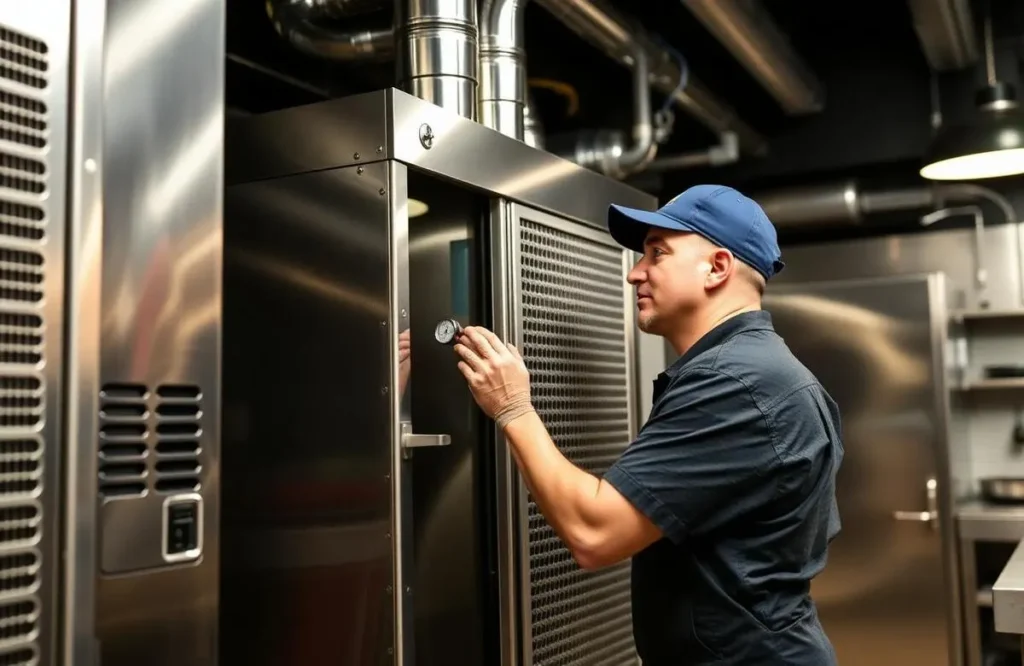
Commercial Refrigeration
The right walk in cooler temperature is the one that keeps every cold-held food at 41°F or below, and for a freezer it is 0°F or below. Most operators set the cooler a few degrees under the limit so that door openings, loading, and defrost cycles do not push food over it. The number on the display is only part of the picture. Where the thermometer sits, how often you check it, and what you do when it drifts decide whether your food stays safe and your inspection goes smoothly. This guide covers the targets, how to measure them, and what to do when a box runs warm.
Key Takeaways
- The FDA Food Code sets cold holding for time and temperature controlled foods at 41°F (5°C) or below, and Maricopa County’s food code builds on it.
- Many operators set the cooler between 35°F and 38°F so there is a margin under 41°F. A freezer should hold 0°F or below.
- Air temperature and food temperature are different readings. Door openings and defrost cycles move the air faster than they move the product.
- Use a properly located, easily readable thermometer, check it against a second reference, and keep a written log.
- Afternoon drift in Phoenix usually points to heat, a dirty condenser, or a worn door seal before it points to a failed part.
The Temperatures That Matter
Several different numbers get quoted, and they measure different things. This table separates them.
| What | Target | Where it comes from |
|---|---|---|
| Cold-held food (time and temperature controlled) | 41°F (5°C) or below | The FDA Food Code, the model used for retail food inspections, including Maricopa County’s |
| Walk-in cooler air setpoint | Commonly 35°F to 38°F | Operator practice to keep a margin under 41°F. Set it for your product and equipment. |
| Walk-in freezer | 0°F or below | USDA guidance for freezer storage |
| Food during a defrost cycle | Still 41°F or below | Maricopa County cold-holding guidance stresses food must stay cold through defrost |
| Thermometer in the unit | Properly located and easily readable | Maricopa County’s environmental health code for refrigerators, walk-ins, and freezers |
The cooler range is not a legal number. It is a practical buffer. A box set at 40°F has almost no room for a loaded cart, a propped door, or a defrost spike, while a box set a few degrees lower absorbs those events and keeps the food under the limit.
Air Temperature Is Not Food Temperature
The display reads the air near a sensor. Food has mass and warms and cools more slowly. That cuts both ways. A short door opening can spike the air reading without changing the product, while a box that has run warm for hours can have warm food even after the air reading recovers.
Many kitchens place a thermometer in a container of water or glycol inside the box so the reading follows product temperature instead of air swings. Then they use a probe thermometer to spot-check actual food. If the air reading and the product reading disagree, trust the product reading and find out why.
Thermometer Placement and Accuracy
- Place it in the warmest part of the box. That is usually near the door and away from the cold stream of the evaporator fans. A thermometer sitting in front of the evaporator will read colder than the food on the shelves.
- Make it easy to read. Maricopa County’s code calls for properly located, easily readable thermometers in refrigerators, walk-in boxes, and freezers. A thermometer nobody can see gets nobody’s attention.
- Check it against a second reference. Compare the box thermometer to a separate calibrated thermometer, and verify the reference with an ice-water test, which should read 32°F.
- Replace a thermometer you cannot trust. A drifting thermometer gives false comfort or false alarms, and both cost money.
Logging: What to Record and When
A log turns a temperature reading into evidence. Inspectors look for documented, dated, consistent logs, and our guide to the restaurant equipment safety inspection covers what else they check. Many kitchens read each cooler and freezer at opening, again mid-shift, and at close. Record the date, time, reading, who took it, and any action taken. Gaps in the log matter as much as bad numbers, because they show a check was missed.
If you want readings without a clipboard, sensors can log continuously and alert you before a box drifts. Our guide to IoT temperature monitoring for commercial refrigeration covers what to look for.
If a walk-in reads above 41°F
Confirm the reading with a second thermometer, and probe a few food items to see actual product temperature.
Check that the door is fully closed, the evaporator fans are running, and nothing blocks the airflow.
Stop loading new product, and move at-risk food into a unit that is holding temperature.
Write down the time, the readings, and what you moved or discarded.
Call for service, and follow your food safety plan and your inspector’s guidance to decide what product is still safe.
Do not guess about food that has been warm. When in doubt, follow your food safety plan, and our monsoon food-safety action plan explains the outage-specific guidance.
Why Phoenix Boxes Drift
Three local factors show up again and again. Heat is first: a condenser rejecting heat into 110°F air works harder and has less capacity left for a loaded cart. Dust is second: it clogs condenser coils and slows the airflow they need. Door traffic is third: a busy line opens the door constantly, and a worn gasket lets warm air in even when the door looks shut.
A box that holds temperature all morning and creeps up in the afternoon is the classic pattern. Check the condenser and the door seals before you assume a failed compressor.
| Symptom | Likely cause | First step |
|---|---|---|
| Drifts up in the afternoon, recovers overnight | Hot condenser, dirty coil, heavy afternoon door traffic | Clean the condenser, check airflow |
| Warm near the door, cold in the back | Worn gasket, door not closing fully, gaps at the threshold | Inspect gaskets and the closer |
| Frost or ice on the evaporator | Defrost problem or warm air getting in | Check the door seal, then call |
| Slow steady rise over days | Refrigeration fault, low charge, failing compressor | Call for service |
| Warm after a big delivery | Overloaded shelves blocking airflow, warm product loaded | Space product out, load in batches |
Walk-in running warm or drifting in the afternoon? Ice Age Commercial can find the cause before it costs you product.
When to Call a Technician
Call when readings stay above target after you have cleared the door, the airflow, and the condenser, when you see frost on the evaporator, or when the compressor or fans run constantly without catching up. If you are not sure whether the box is failing or simply loaded, our not-cooling troubleshooting guide helps you tell the difference, and our gasket replacement guide covers door seals.
Ice Age Commercial offers same-day service based on availability across Tempe and the Phoenix Metro Area. See our walk-in cooler and freezer repair and refrigeration repair services.
Frequently Asked Questions
What temperature should a walk-in cooler be?
Food that needs cold holding must stay at 41°F or below. Many operators set the cooler air between 35°F and 38°F so that door openings and loading do not push product over the limit. Set yours for your equipment and product.
What temperature should a walk-in freezer be?
0°F or below. USDA guidance recommends holding frozen food at 0°F or below for safe long-term storage.
Is 45°F too warm for a walk-in cooler?
Yes. Cold-held food must stay at 41°F or below, so a box reading 45°F is out of range. Check the reading with a second thermometer, protect the food, and get the box fixed.
How often should I log walk-in temperatures?
Many kitchens record each unit at opening, mid-shift, and close. Follow your food safety plan and your inspector’s guidance, and keep the log dated and consistent.
Does a defrost cycle matter for food temperature?
It can. The air near the evaporator can spike during defrost, and Maricopa County guidance stresses that food must stay cold through the cycle. If product warms during defrost, have the defrost settings and the box checked.
Written and reviewed by Ice Age Commercial. We repair walk-in coolers, freezers, and commercial refrigeration across Tempe and the Phoenix Metro Area. Your local health authority makes the final call on requirements for your establishment.
Keep Every Box in Range
Ice Age Commercial repairs walk-in coolers, freezers, and refrigeration for restaurants, grocers, and convenience stores across Tempe and the Phoenix Metro Area. Same-day service is available based on availability.