Restaurant Equipment Maintenance
A restaurant equipment safety inspection covers more than health code compliance: gas lines, ventilation hoods, and fire suppression systems all carry their own OSHA and Maricopa County requirements, each on its own inspection schedule. Here’s a complete breakdown by frequency and equipment category, so nothing falls through the cracks between formal inspections.
Key Takeaways
- Gas lines, ventilation hoods, and fire suppression systems each have their own inspection frequency and standards, not one blanket schedule.
- Daily checks catch the small issues that would otherwise surface as a failed inspection weeks later.
- NSF standards and thermostat accuracy checks matter for refrigeration and cooking equipment alike.
- OSHA workplace safety rules and Maricopa County health code requirements overlap but aren’t identical, and both apply.
- Documented maintenance records are what a health department audit actually asks to see, not verbal assurances.
Two Regulatory Frameworks, One Kitchen
Restaurant equipment safety sits at the intersection of two separate regulatory frameworks that operators often conflate. OSHA’s workplace safety standards focus on employee safety: proper ventilation, electrical safety, machine guarding on equipment like slicers and mixers, and safe handling of hot surfaces and hazardous materials. Maricopa County’s health department requirements focus on food safety: refrigeration temperatures, sanitation, and equipment condition as it relates to contamination risk. A kitchen can pass one and fail the other, so a complete inspection routine needs to address both, not just the one your last audit happened to focus on.
Daily Safety Checks
- Gas lines: Check for the smell of gas near connections and confirm burner ignition is even across all cooking equipment.
- Ventilation hoods: Confirm the exhaust fan is running and free of unusual noise before opening for service.
- Refrigeration temperatures: Log the temperature of each cooler and freezer at opening, before product is loaded for the day.
- Slicer and mixer guards: Confirm safety guards are in place and functioning before equipment is used for prep, an OSHA-relevant check that’s easy to skip when the kitchen is busy.
Weekly Checks
- Hood grease buildup: Visually inspect filters and interior surfaces for grease accumulation that could pose a fire risk.
- Ice machine sanitation: Check for scale or mold buildup inside the bin, which affects both food safety and machine performance.
- Door gaskets on refrigeration units: A quick visual and dollar-bill check catches a failing seal before it affects temperature.
- Fire extinguisher accessibility: Confirm extinguishers are unobstructed and pressure gauges read in the operable range.
Monthly and Scheduled Checks
- Fire suppression system inspection: Verify the system is charged and inspection tags are current, per your local fire code requirements.
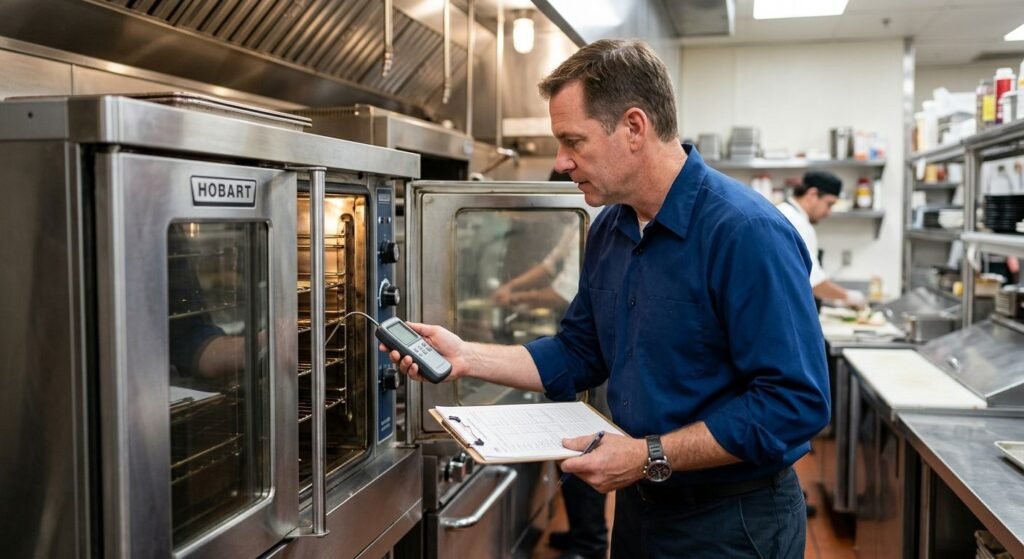
- Thermostat calibration: Confirm cooking and refrigeration equipment thermostats read accurately against a separate reference thermometer.
- Ventilation hood professional cleaning: Grease buildup deep in the ductwork needs professional cleaning on a schedule tied to your cooking volume.
- Electrical connections: A technician check of contactors and connections on high-draw equipment catches wear before it becomes an electrical hazard.
| Equipment | Check Frequency | Primary Standard |
|---|---|---|
| Gas lines and burners | Daily | Fire code / manufacturer spec |
| Ventilation hood filters | Weekly (visual), monthly (professional) | Fire code |
| Fire suppression system | Monthly to quarterly | Local fire code |
| Refrigeration temperature | Daily | Maricopa County health code |
| Slicer and mixer guards | Daily, before use | OSHA |
What an Inspector Looks For First
Documented temperature logs for refrigeration equipment, dated and consistent.
Current inspection tags on fire suppression systems and fire extinguishers.
Visible cleanliness and working order of ventilation hoods and filters.
Safety guards properly installed on slicers, mixers, and other equipment with moving parts.
Kitchens that can produce these records quickly tend to have noticeably smoother inspections than those scrambling to reconstruct a history on the spot.
Refrigeration and Cooking Equipment Standards
Refrigeration units should hold food at or below 41 degrees Fahrenheit, per standard food safety guidance, and NSF-certified equipment is generally expected in a commercial kitchen. Cooking equipment thermostat accuracy matters just as much: a range or oven reading even a few degrees off can affect both food safety and consistency, and catching that drift early avoids both an inspection flag and a wasted batch of food. A simple monthly calibration check against a separate reference thermometer is enough to catch drift before it becomes a compliance issue.
Common Violations and How to Avoid Them
A handful of issues account for a disproportionate share of failed inspections in commercial kitchens: refrigeration units running above safe holding temperature, missing or expired fire suppression inspection tags, grease buildup in hood filters, and missing machine guards on prep equipment. Every one of these is caught by the daily, weekly, and monthly checklist above if it’s actually followed consistently, which is the main reason documented routines matter more than any single deep-clean before an announced inspection.
Due for an inspection prep visit before your next health department audit?
When to Bring in a Professional
Fire suppression system service, gas line work, and hood ventilation certification all require licensed professionals, not general kitchen staff. Ice Age Commercial offers same-day service, based on availability, for refrigeration and cooking equipment inspections across Tempe and the Phoenix Metro Area, and can help build a maintenance schedule that keeps your documentation current between formal inspections rather than scrambling right before one.
Frequently Asked Questions
How often should restaurant equipment be safety inspected?
Daily checks cover gas lines, ventilation, refrigeration temperatures, and equipment guards. Weekly checks cover hood grease and door gaskets. Fire suppression systems and professional hood cleaning follow a monthly or quarterly schedule depending on your local fire code and cooking volume.
What temperature should commercial refrigeration hold?
Standard food safety guidance calls for refrigeration units to hold food at or below 41 degrees Fahrenheit. A thermostat calibration check confirms your equipment is reading accurately against that standard.
What’s the difference between OSHA requirements and health department requirements?
OSHA focuses on employee workplace safety, things like machine guarding and electrical safety. Maricopa County health department requirements focus on food safety, like refrigeration temperatures and sanitation. A kitchen needs to satisfy both, since they cover different risks.
Do you help prepare for health department inspections?
Yes. We can inspect and document refrigeration and cooking equipment condition ahead of a scheduled Maricopa County health inspection, giving you a clear picture of anything worth addressing beforehand.
Written and reviewed by Ice Age Commercial. We inspect and maintain restaurant equipment across Tempe and the Phoenix Metro Area with both OSHA and health code compliance in mind on every visit.
Get Ahead of Your Next Inspection
Ice Age Commercial helps restaurants and grocers across Tempe and the Phoenix Metro Area keep refrigeration and cooking equipment inspection-ready.