Commercial Kitchen Repair
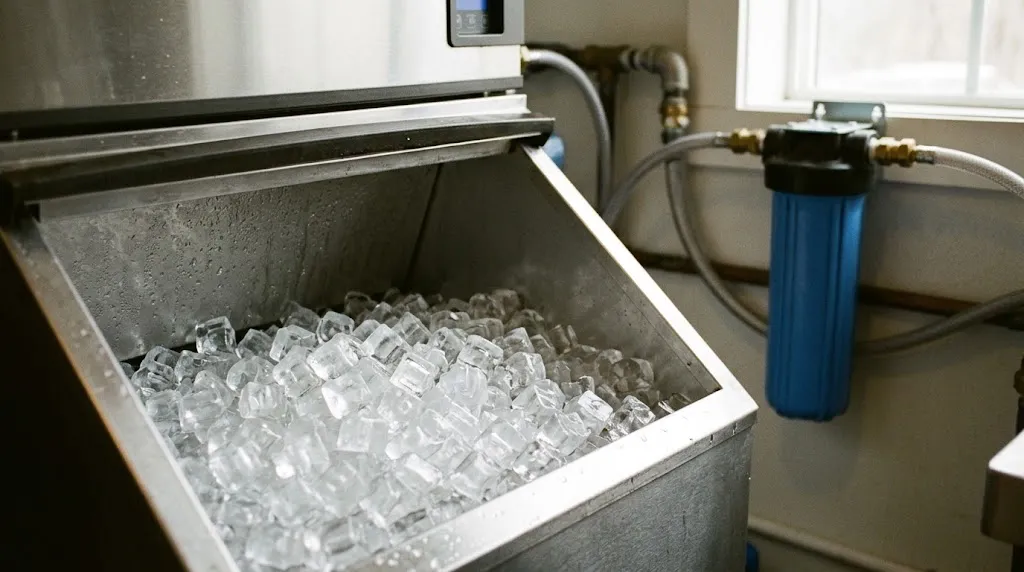
Phoenix tap water is hard, and a commercial ice machine is one of the first places it shows. The City of Phoenix reports total hardness of 172 to 302 ppm, or 10 to 17.6 grains per gallon, in its 2025 water quality report, and the U.S. Geological Survey classifies anything above 180 mg/L as very hard. Every batch of ice leaves minerals behind, and in this water they build into scale that slows the machine, clouds the ice, and fouls sensors and valves. A correctly chosen filter that is changed on schedule is the least expensive protection you can give the machine. This guide explains what hard water does inside an ice machine, what filtration can and cannot do, and how to set a filter schedule that fits Phoenix water.
Key Takeaways
- The City of Phoenix reports hardness of 172 to 302 ppm (10 to 17.6 grains per gallon). By the USGS scale, anything over 180 mg/L is very hard, which covers most of that range.
- The City calls hardness a harmless, aesthetic issue, so the problem is the machine, not the ice: scale slows production, clouds the ice, and fouls sensors and valves.
- Not every filter controls scale. Sediment and carbon filters improve taste and clarity, but scale control needs a scale-inhibiting or softening step that the manufacturer approves.
- Change cartridges on the manufacturer schedule, sooner if output drops, and write the date on the housing and in your log.
- Filtration does not replace cleaning and descaling. Schedule all three.
What the City of Phoenix Says About Hardness
In its 2025 Water Quality Report, the City of Phoenix lists total hardness of 172 to 302 ppm, which is 10 to 17.6 grains per gallon. The City describes taste, odor, and hardness as harmless, aesthetic qualities that are not regulated under drinking water health standards, and explains that hardness comes from calcium and magnesium picked up from the soils the source water passes through.
For comparison, the U.S. Geological Survey classifies hardness this way:
| Classification | Hardness (mg/L as calcium carbonate) |
|---|---|
| Soft | 0 to 60 |
| Moderately hard | 61 to 120 |
| Hard | 121 to 180 |
| Very hard | Over 180 |
Phoenix’s reported range runs from the top of the “hard” band into “very hard,” and most of it sits above 180. For water, ppm and mg/L are effectively the same number. The City reports a range, so your own tap may fall anywhere in it. A hardness test strip, or a test from a water lab, removes the guesswork.
What Scale Does Inside an Ice Machine
An ice machine freezes water on an evaporator, and the dissolved minerals do not freeze with it. They stay behind in the water system and build up as scale on the evaporator plates, the water distribution parts, the sump, and the sensors. Because the City treats hardness as a harmless, aesthetic matter, the cost shows up in the machine, not in the ice:
- Slower ice production and longer freeze cycles.
- Cloudy, soft, or oddly shaped ice.
- A white or tan mineral crust on the evaporator plates, water tubes, and sump.
- Fouled water-level or thickness sensors that cause false readings or shutdowns.
- Sticking or leaking water valves and clogged distribution parts.
- More frequent cleaning and shorter life for wear parts.
If your machine already shows these signs, start with our troubleshooting guide on why a commercial ice machine stops making ice.
What a Water Filter Can and Cannot Do
The word “filter” covers several different products, and only some of them address scale.
| Type | What it does | Limits |
|---|---|---|
| Sediment filter | Catches sand, rust, and silt that can clog screens and valves | Does not reduce dissolved hardness |
| Carbon filter | Reduces chlorine, taste, and odor, which improves the taste and clarity of ice | Does not remove dissolved minerals on its own |
| Scale-inhibiting filter or feed system | Treats the water so minerals deposit more slowly on equipment | Slows scale instead of removing the minerals, and results depend on the product and your water |
| Softener or reverse osmosis | Reduces dissolved minerals more aggressively | Adds cost and maintenance, may not suit every machine, and must be sized and approved for it |
The City says filters and softeners are not needed for drinking-water health, and asks anyone who uses them to follow the manufacturers’ maintenance instructions. For an ice machine, the case for filtration is protecting the equipment and the quality of the ice. Choose filters rated for your machine’s flow rate and approved by its manufacturer, and look for independent certification to the relevant NSF/ANSI standards. A filter that restricts flow, or that is the wrong type for your water, can cause the very problems you are trying to prevent.
A Practical Filter Schedule for Phoenix Water
Your manufacturer’s manual sets the real intervals. Treat these cadences as a starting point, and tighten them if your water is at the hard end of the City’s range or your volume is high.
| Task | Suggested cadence |
|---|---|
| Check the filter pressure gauge, if fitted, and the quality of the ice | Monthly |
| Replace the filter cartridge | Per the manufacturer, commonly about every six months, and sooner with heavy volume or falling output |
| Clean and sanitize the machine and bin | Per the manufacturer, and more often if you see slime or scale |
| Descale the water system | When scale appears or the manual calls for it, using only a descaler the manufacturer approves |
| Record each change | Every time, with the date written on the filter housing |
Signs your filtration is not keeping up
- Ice that is getting cloudy or soft.
- Production that is slower than the same season last year.
- A white or tan crust around the water curtain, distributor, or sump.
- Frequent sensor faults or shutdowns.
- Low water flow at the filter housing.
A new filter will not remove scale that has already formed. If you see scale, have the machine cleaned and descaled first, then install fresh filtration.
Want a technician to check your filter, test your water, and descale the machine? Ice Age Commercial services commercial ice machines across the Phoenix Metro, with same-day service based on availability.
Filtration and Health Inspections
Ice counts as food, and inspectors look at the ice machine and the bin. A dated filter and a cleaning log show a working routine. Clean and sanitize on schedule, keep the scoop out of the bin, and use only chemicals approved for food-contact surfaces and for your machine. Our restaurant equipment safety inspection guide explains what inspectors look at first, and our kitchen equipment maintenance checklist shows where the ice machine fits in your routine.
Phoenix-Specific Notes
- Heat: air-cooled machines work harder in hot weather, and scale adds load. Keep condensers clean and airflow clear.
- Chemicals: use only a cleaner and descaler approved for your machine. Some evaporators are plated, and the wrong product can damage them.
- New filters: flush a new cartridge as the manufacturer directs before you rely on it.
- Records: keep filter dates, cleaning dates, and any hardness test results together so a technician can see the pattern.
If your ice machine needs more than a filter change, our ice machine repair team services commercial machines across the Phoenix Metro.
Frequently Asked Questions
Do I need a water filter on my commercial ice machine in Phoenix?
The City says filtration is not needed for drinking-water health, but hard water causes scale inside equipment. Many manufacturers recommend filtration, and some tie warranty coverage to water quality, so check your manual and your warranty terms.
How often should I change the filter?
Follow the manufacturer’s interval, commonly about every six months. Change it sooner if ice production drops, a pressure gauge shows a problem, or your volume is high.
Will a water softener alone fix scale?
A softener reduces the hardness minerals that reach the machine, but it needs its own maintenance and not every manufacturer approves every setup. Ask your technician and follow the machine’s manual.
How can I find out how hard my water is?
Use a hardness test strip at the tap or send a sample to a lab. The City’s 2025 report gives a range of 172 to 302 ppm across its system, and your location may differ.
Written and reviewed by Ice Age Commercial. We repair and maintain refrigeration, ice machines, dishwashers, and cooking equipment across Tempe and the Phoenix Metro Area. Always defer to your manufacturer’s manuals and your local code.
Protect Your Ice Machine From Phoenix Water
Ice Age Commercial repairs, cleans, and services commercial ice machines for restaurants, hotels, bars, and grocers across Tempe and the Phoenix Metro Area. Same-day service is available based on availability.