
Proper maintenance in a commercial kitchen is all about staying ahead of the game. It’s a combination of daily checks your team can handle and periodic professional service calls that catch problems before they start. Think of it as your best defense against the chaos of unexpected breakdowns, expensive emergency repairs, and the nightmare of downtime during a dinner rush.
The Real Cost of Equipment Neglect
Let’s be real—adding maintenance tasks to an already packed schedule can feel like a chore. But have you ever considered the alternative? Picture your walk-in freezer giving up the ghost on a packed Saturday night, full of thousands of dollars worth of prime cuts and prepped ingredients. That’s when the true cost of neglect smacks you in the face. It stops being a theoretical expense and becomes a full-blown crisis.
Skipping routine upkeep is a massive gamble. The consequences go far beyond a single repair bill; they create a ripple effect that can damage your food costs, your team’s morale, and even your restaurant’s reputation.
The Domino Effect of a Single Failure
Let’s walk through a common scenario. Imagine the thermostat on one of your convection ovens starts to go. At first, it’s subtle—cooking times are just a little off. Before you know it, your signature roasted chicken is coming out undercooked one hour and burnt the next.
This seemingly minor issue quickly snowballs into much bigger problems:
- Wasted Food: Inconsistent cooking temps mean ruined product. Every dish that gets tossed goes straight to the wrong side of your food cost ledger.
- Angry Customers: One bad meal can turn into a scathing online review that scares away dozens of potential customers.
- Stressed Staff: Your line cooks are now fighting with the equipment, trying to compensate for its failures. This slows down ticket times and cranks up the pressure in an already high-stress environment.
This isn’t some hypothetical situation; it’s what happens every day in kitchens where maintenance is put on the back burner. This is why it’s so important to have a list of essential maintenance tips to keep your commercial kitchen appliances running smoothly. Proactive care isn’t just about fixing what’s broken—it’s about preventing these dominoes from ever starting to fall.
“A proactive maintenance plan isn’t an expense—it’s one of the smartest investments you can make to protect your profitability and keep your doors open. The cost of prevention is always lower than the cost of a catastrophic failure.”
Rising Replacement Costs Make Maintenance Non-Negotiable
The financial case for consistent commercial kitchen equipment maintenance has never been stronger. We’re seeing the cost to replace essential appliances climb higher and higher.
For instance, the price tag for a new refrigeration unit has jumped by roughly 24% recently. Other key pieces of equipment have seen their costs shoot up by around 21%. These numbers make it painfully clear that running your equipment into the ground is an incredibly expensive strategy.
By investing a little in regular tune-ups and servicing, you can sidestep the massive, budget-breaking expense of a full replacement. In the end, consistent upkeep is the best insurance policy you can have for your kitchen’s most critical assets.
Crafting Your Kitchen’s Maintenance Playbook
Waiting for equipment to break down before you fix it is a surefire recipe for chaos in a commercial kitchen. A truly effective maintenance strategy isn’t just a checklist; it’s a living system, a playbook your entire team understands and acts on every single day. The goal is to shift from reactive repairs to proactive care, empowering your staff to take real ownership of the tools they use.
Think of it as creating a health plan for your kitchen. Some things, like wiping down a prep surface, are simple daily habits. Others, like a deep oven calibration, are more like a monthly check-up. We’re aiming to make these actions second nature.
This all starts with the basics. Consistent, simple actions performed daily are the foundation for everything else.
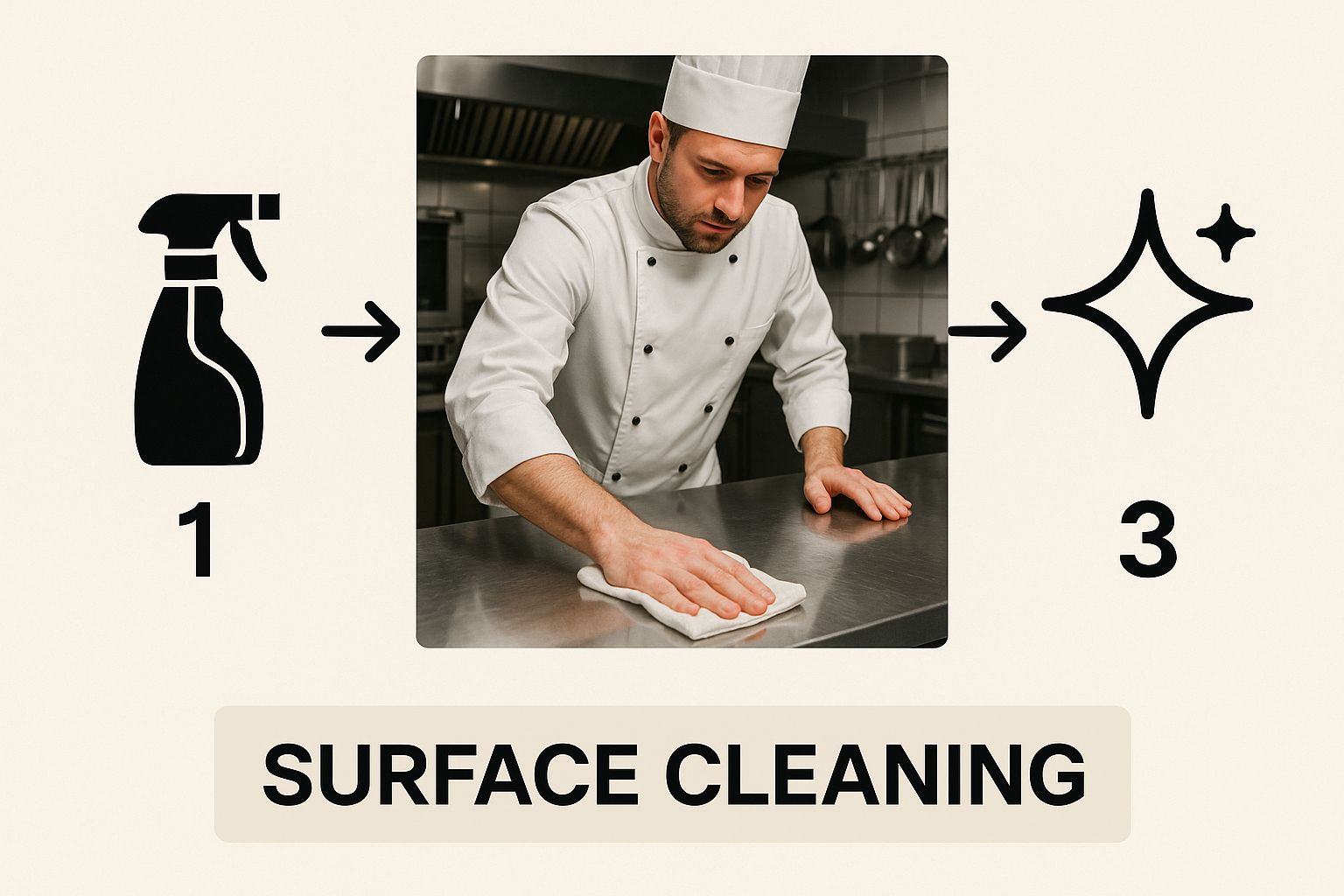
Without this groundwork, the bigger, less frequent tasks just won’t be as effective. It’s the small, daily disciplines that prevent the big, costly breakdowns.
Breaking Down Your Maintenance Tiers
The easiest way I’ve found to build a plan that actually sticks is to sort tasks by how often they need to get done. This tiered approach keeps things simple and makes training a whole lot easier.
- Daily Must-Dos: These are the non-negotiables. Think quick, high-impact tasks done at the start or end of a shift that stop problems before they even begin.
- Weekly Deep Dives: This is where you tackle the grime and buildup that accumulates over time. These deeper cleaning and inspection jobs prevent gradual wear and tear from becoming a serious issue.
- Monthly Health Checks: These are often more technical inspections. We’re talking about calibrating equipment, checking components, and ensuring everything is running at peak efficiency for the long haul.
A tiered system like this ensures nothing slips through the cracks. It also has a huge impact on something we all obsess over: food safety. For more on that specific connection, you can read our guide on https://lightsteelblue-crane-848111.hostingersite.com/the-importance-of-regular-commercial-appliance-maintenance-for-food-safety/ and see why this matters so much.
Assigning Clear Responsibilities
Once you’ve sorted your tasks, you have to decide who does what. Vague instructions are the enemy of execution; tasks get ignored if no one feels responsible. You need to assign specific duties to specific roles.
For instance, the closing line cook is always on the hook for the fryer boil-out. The kitchen manager handles the monthly check on the walk-in’s door seals. Simple as that.
A maintenance plan without clear ownership is just a piece of paper. When everyone knows exactly what they are responsible for, accountability becomes part of your kitchen’s culture.
This clarity does more than just get the job done—it empowers your team. They’re no longer just cleaning; they’re actively safeguarding the kitchen’s reliability and success.
For a fantastic, in-depth resource that covers everything from DIY fixes to knowing when to call in a pro, check out this Restaurant Equipment Repair Master Guide. It’s a great tool for adding those finer details to your playbook.
Sample Kitchen Maintenance Schedule
To give you a running start, I’ve put together a sample schedule below. This is just a template—you’ll need to adapt it to the specific equipment you have in your kitchen.
Once you’ve customized it, post it somewhere highly visible where your team can see and use it every day.
| Equipment | Daily Tasks | Weekly Tasks | Monthly Tasks |
|---|---|---|---|
| Fryer | Filter oil, wipe down exterior. | Perform a full boil-out. | Inspect pilot light and thermostat. |
| Griddle | Scrape surface, empty grease trap. | Season the cooking surface. | Check gas connections for leaks. |
| Walk-In Cooler | Sweep floors, wipe up spills. | Clean fan guards and blades. | Inspect door seals for cracks. |
| Oven | Wipe down doors and interior. | Clean racks and convection fan. | Calibrate thermostat for accuracy. |
| Ice Machine | Wipe down exterior surfaces. | Sanitize the interior bin. | Descale the machine, check water filter. |
Treat this table as your foundation. A well-maintained kitchen is a productive, safe, and profitable one. It all comes down to consistency and clear communication.
Mastering Your Cooking Line Maintenance
The cooking line is the heart of your operation. It’s where the magic happens, but it’s also where a minor oversight can snowball into a full-blown service disaster. The performance of your ranges, griddles, fryers, and ovens directly dictates your food quality and ticket times. When it comes to commercial kitchen equipment maintenance on this front line, it’s not about massive, time-consuming overhauls. It’s about building consistent, small habits that prevent big headaches down the road.
Think about a range burner with an uneven, sputtering flame. That’s not just a small annoyance; it’s a clear sign of inefficiency. It’s wasting gas, creating hot spots that can scorch a delicate sauce, and ruining what should have been a perfect sear. These are the kinds of details that separate a well-oiled machine from a kitchen constantly fighting its own equipment.
Ranges, Ovens, and Griddles
Let’s be honest, your ranges and ovens are the undisputed workhorses. One of the most common complaints I hear is about inconsistent heating, and more often than not, the culprit is something simple—a dirty burner or a thermostat that’s slowly drifted out of calibration.
Here’s a pro tip I share with every chef: pay attention to the color of your gas burner flames. A healthy, efficient flame burns a crisp blue with just a tiny yellow tip. If you’re seeing a lot of yellow or orange, that’s a red flag. It means the burner ports are clogged with grease and carbon, leading to incomplete combustion. You’re not just wasting energy; you’re losing precise temperature control.
When it comes to griddles, proper seasoning is everything. This isn’t just about cleaning; it’s about building and maintaining that perfect, natural non-stick surface. The process is straightforward:
- Scrape It Down: First, get the surface completely clean of all food debris.
- Apply a Thin Coat of Oil: Use a high-smoke-point oil like canola or grapeseed. Don’t slather it on; a thin layer is all you need.
- Heat It Up: Bring the griddle to a medium-high heat, somewhere around 350°F, and let that oil start to smoke.
- Wipe and Repeat: Once the smoking stops, carefully wipe it down and apply another super-thin coat of oil. Doing this a few times builds a durable, slick surface that makes cooking and cleanup a breeze.
This little ritual makes a huge difference. It prevents sticking, means you use less butter or oil during service, and cuts your cleaning time in half.
I can’t stress this enough: regular oven calibration is one of the most overlooked yet critical maintenance tasks. An oven running just 25 degrees too hot can turn a perfect bake into a burnt offering, directly torching your food costs and consistency.
Deep Fryer Diligence
A deep fryer demands daily attention if you want to serve high-quality food. The number one reason for greasy, unappealing fried items? Old, degraded oil and a neglected heating element. When food particles and sediment cake onto the heating element, it creates an insulating barrier, preventing it from transferring heat to the oil efficiently.
This forces the fryer to work harder and longer to maintain temperature, which in turn degrades your oil much faster. The result is food that soaks up grease instead of cooking quickly to a perfect crisp. Daily oil filtering and a weekly “boil out” with a specialized cleaning solution are absolutely non-negotiable for any kitchen that takes its fried program seriously.
Putting in this consistent effort across your entire cooking line transforms your equipment from a potential liability into a reliable partner. These small, daily actions are what empower your team to execute flawlessly, shift after shift. They’re the foundation of a smooth, safe, and profitable kitchen.
Protecting Your Refrigeration and Warewashing Assets
While the cooking line gets all the glory, your refrigerators and dishwashers are the real workhorses of the kitchen. They are the silent partners running 24/7, protecting thousands of dollars in food inventory and making sure every plate is safe to serve. You simply can’t afford to ignore them; a failure here hits your bottom line and your reputation, hard.
The stakes are just higher with this equipment. A struggling oven might undercook a dish, but a struggling refrigerator can wipe out your entire inventory overnight. A broken dishwasher doesn’t just mean a pile of dirty plates; it’s a health code violation waiting to happen, one that can shut your doors.

Keeping Your Cool Under Pressure
Think about it: your refrigeration units are in a constant war with the heat of the kitchen. That’s why one of the most vital—and most overlooked—maintenance tasks is cleaning the condenser coils. These coils are essentially the radiator for your cooler, and when they get caked in grease, dust, and kitchen grime, the whole system suffocates.
This forces the compressor to work itself to death, which sends your energy bills through the roof. I’ve seen utility costs jump by 15-20% from this one simple issue. A quick wipe-down once a month is all it takes to prevent it.
Another sneaky profit-killer? Worn-out door gaskets. A small tear or a brittle seal lets cold air bleed out constantly. Your compressor then has to run non-stop just to keep up, burning electricity and aging the unit prematurely. You’re literally paying to cool the kitchen.
If you’re already seeing problems like fluctuating temperatures or frost buildup, our guide on 5 common commercial refrigerator problems and when to call for help has some deeper troubleshooting tips.
Warewashing and Staying Compliant
Your commercial dishwasher is fundamentally a compliance machine. Its entire purpose is to produce sanitized, spotless wares, and there’s no room for error. The two biggest enemies you’ll face here are hard water scale and trapped food debris.
Limescale gradually coats the heating elements, making it impossible for the water to hit the sanitizing temperatures required by the health department. It also clogs the spray arms, which is probably the number one reason I see kitchens fail warewashing inspections. If those jets are blocked, water can’t hit every surface, and you end up with dishes that are still dirty and unsafe.
A regular descaling cycle is non-negotiable. You also need to train your team to pull out and inspect the spray arms every single day. Just unscrew them, use a small tool to poke out any blockages, and give them a good rinse. It takes two minutes.
A dishwasher that isn’t properly maintained is more than an inconvenience; it’s a direct risk to your customers’ health and your business’s license. Consistently clean spray arms and a scale-free interior are non-negotiable for food safety.
When you dedicate time to these crucial areas, you’re doing more than just commercial kitchen equipment maintenance. You are actively protecting your most valuable assets—from your perishable food to the reputation you’ve worked so hard to build.
When to Call in a Professional Technician
Your team’s daily and weekly cleaning routines are the first line of defense for a smooth-running kitchen. But let’s be realistic—even the most dedicated staff will hit a wall with problems that are simply beyond their scope.
Knowing that exact moment to put down the wrench and pick up the phone to call a pro is what separates a savvy manager from one who’s always just putting out fires.
Trying to tackle a complex repair without the right training isn’t just a gamble; it’s a hazard. You could easily void your equipment’s warranty, turning a fixable issue into a full-blown replacement nightmare. The line in the sand between a simple fix and a professional job is usually drawn where specialized tools, electrical systems, or gas lines are involved.
Identifying Problems Beyond Your Scope
Some issues are immediate red flags. They scream “don’t touch this.” If you run into any of these situations, it’s time to call for professional commercial kitchen equipment maintenance right away.
- Electrical Issues: Is an appliance constantly tripping the circuit breaker? Do you see frayed wiring or smell that distinct, acrid burning odor? Shut it down immediately. Electrical work is no place for guesswork and should only be touched by a licensed electrician.
- Gas Leaks: The smell of gas is a full-stop emergency. If you suspect a leak from a range, fryer, or oven, kill the main gas supply, clear the area, and call for emergency service. No exceptions.
- Sealed System Refrigeration Problems: A compressor that refuses to kick on or the tell-tale signs of a refrigerant leak—like oily residue or faint hissing—are not DIY jobs. These sealed systems require certified technicians with specialized equipment to service them legally and safely.
- Major Component Failures: A busted motor, a fried control board, or a cracked heat exchanger in your oven all require an expert. These aren’t simple part swaps; they need a proper diagnosis and skilled repair.
Even with the best care, you might find yourself fixing your pizza prep table or staring down a convection oven that won’t heat. Knowing when to tag in an expert saves you time, money, and a massive headache.
Think of a service contract as adding a specialist to your team. It’s an investment in uptime, giving you a reliable partner who can tackle complex problems and, more importantly, prevent many of them from ever happening.
The Value of a Service Contract
Instead of just waiting for an emergency, think bigger. A scheduled maintenance contract gives you a serious strategic edge. As kitchen equipment gets more complex and tech-heavy, the need for expert service is only growing.
In fact, the commercial kitchen equipment maintenance services market is expected to grow at a compound annual growth rate (CAGR) of about 7% from 2025 through 2033. This isn’t just a random statistic; it shows a clear industry-wide move toward proactive care to slash downtime and protect those big-ticket investments.
A great technician does more than just fix what’s broken. They perform precise calibrations, inspect parts for wear and tear, and catch potential failures before they bring your line to a screeching halt. This forward-thinking approach keeps your equipment running efficiently, ensures you meet safety codes, and helps it last as long as it was designed to.
Answering Your Top Kitchen Maintenance Questions
Even with a perfect plan on paper, the reality of a busy kitchen means questions are always going to pop up. Over the years, I’ve heard the same concerns from countless kitchen managers and restaurant owners. Let’s tackle some of the most common ones to give you a bit more clarity.
It’s clear that more businesses are thinking this way. The global market for kitchen appliance repair is expected to climb to around USD 22 billion by 2033. This isn’t surprising—with a bigger push for sustainability and easier access to spare parts, smart, professional upkeep just makes good business sense. You can read more about the growth of the repair market if you’re interested in the trend.
How Often Do I Really Need Professional Servicing?
While your team is your first line of defense with daily care, professional tune-ups are non-negotiable. The right frequency really depends on the specific piece of equipment.
- Refrigeration & HVAC: These are the workhorses. Get them looked at every six months. A pro check-up before the summer heat hits and again before winter is the best way to avoid a nasty surprise during your busiest seasons.
- The Cooking Line: For your ovens, ranges, and fryers, an annual professional service is a smart investment. This isn’t just a cleaning; it’s about calibrating temperatures, checking gas connections for safety, and making sure all the internal safety features are actually working.
When in doubt, pull out the owner’s manual. The manufacturer’s guidelines are always the best starting point for building out your commercial kitchen equipment maintenance schedule.
What Are the Real Red Flags That My Equipment Is About to Fail?
Believe me, your equipment will almost always tell you something is wrong before it completely gives up. You just have to know what to look (and listen) for.
Unusual noises—grinding, squealing, or loud clanking—are dead giveaways that a mechanical part is on its last legs. Other urgent signs are just as obvious: a freezer that can’t seem to stay frozen, any hint of a gas smell or a puddle on the floor, or a circuit breaker that keeps tripping.
Here’s a pro tip: keep an eye on your utility bills. If you see a sudden, sharp increase you can’t explain, it might be your walk-in cooler working way too hard to keep up. That’s a clear signal it needs a professional diagnosis before it dies completely.
If you hear a weird noise or smell something off, don’t ignore it. Those are the clearest, earliest warnings you’ll get that a component is failing. Acting fast can be the difference between a simple fix and a catastrophic breakdown that shuts you down.
Can My Staff Just Handle Everything to Save a Few Bucks?
Look, empowering your team with daily cleaning and simple checks is absolutely essential—it’s the foundation of a good maintenance program and will definitely save you money. But you have to know where to draw the line.
Anything involving gas lines, intricate electrical systems, or sealed refrigeration units is strictly for certified technicians. Period.
Trying to DIY these repairs isn’t just dangerous; it can instantly void your warranty and cause even more expensive damage. Think of a professional service call not as a cost, but as an investment in safety, compliance, and keeping your doors open.
When you do need an expert, trust the team at Ice Age Refrigeration. For reliable commercial appliance repair in the Phoenix Metro Area, contact us today to schedule your service.
Article created using Outrank